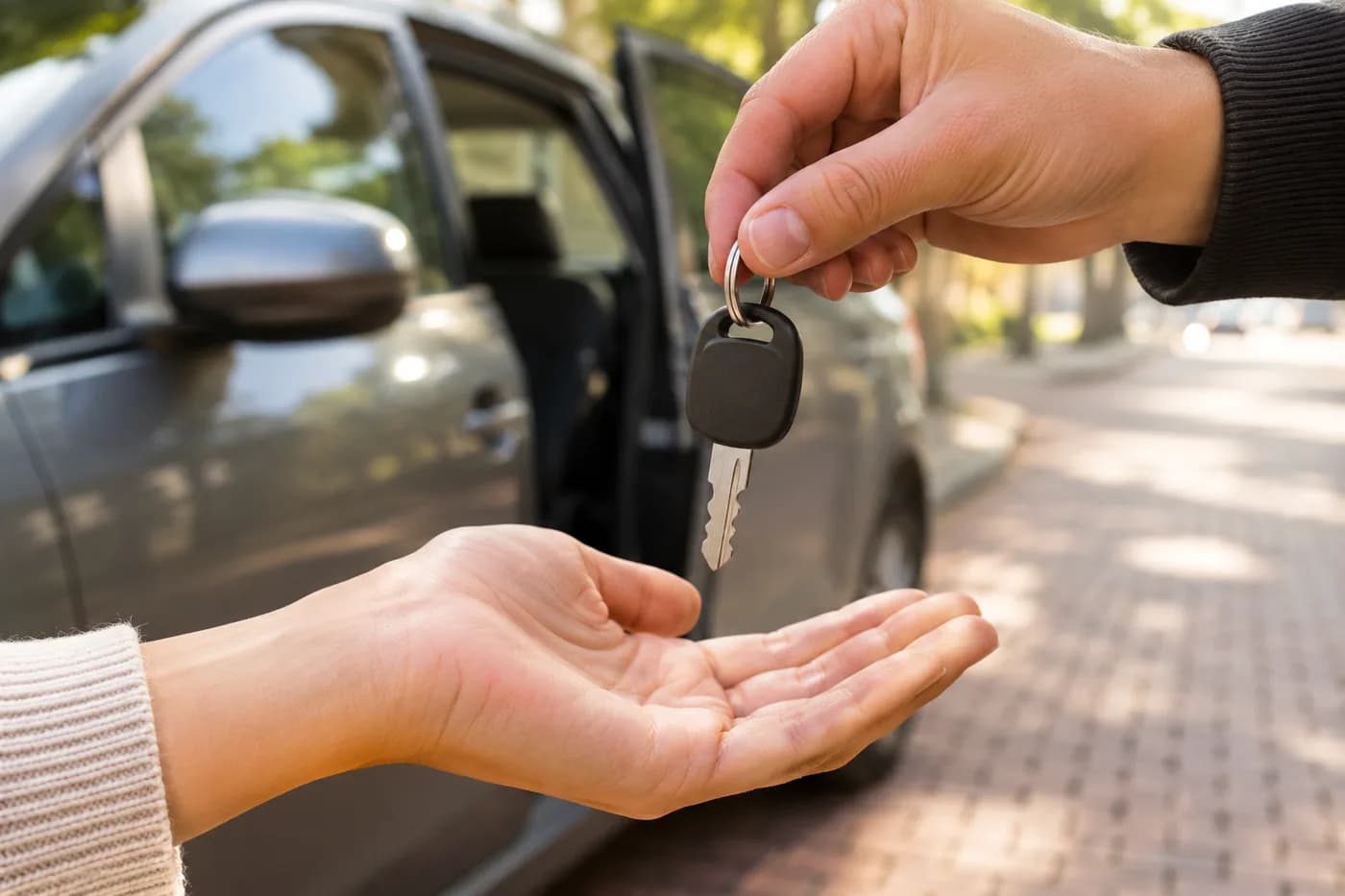
A set of car keys being passed from one hand to another beside a parked car

The company behind the offer

A car registered here keeps billing the name in the register, whatever is going on in your life. webuycar.nl exists to end that in a single visit: we name a price, drive to the car, and move it out of your name while you stand there.

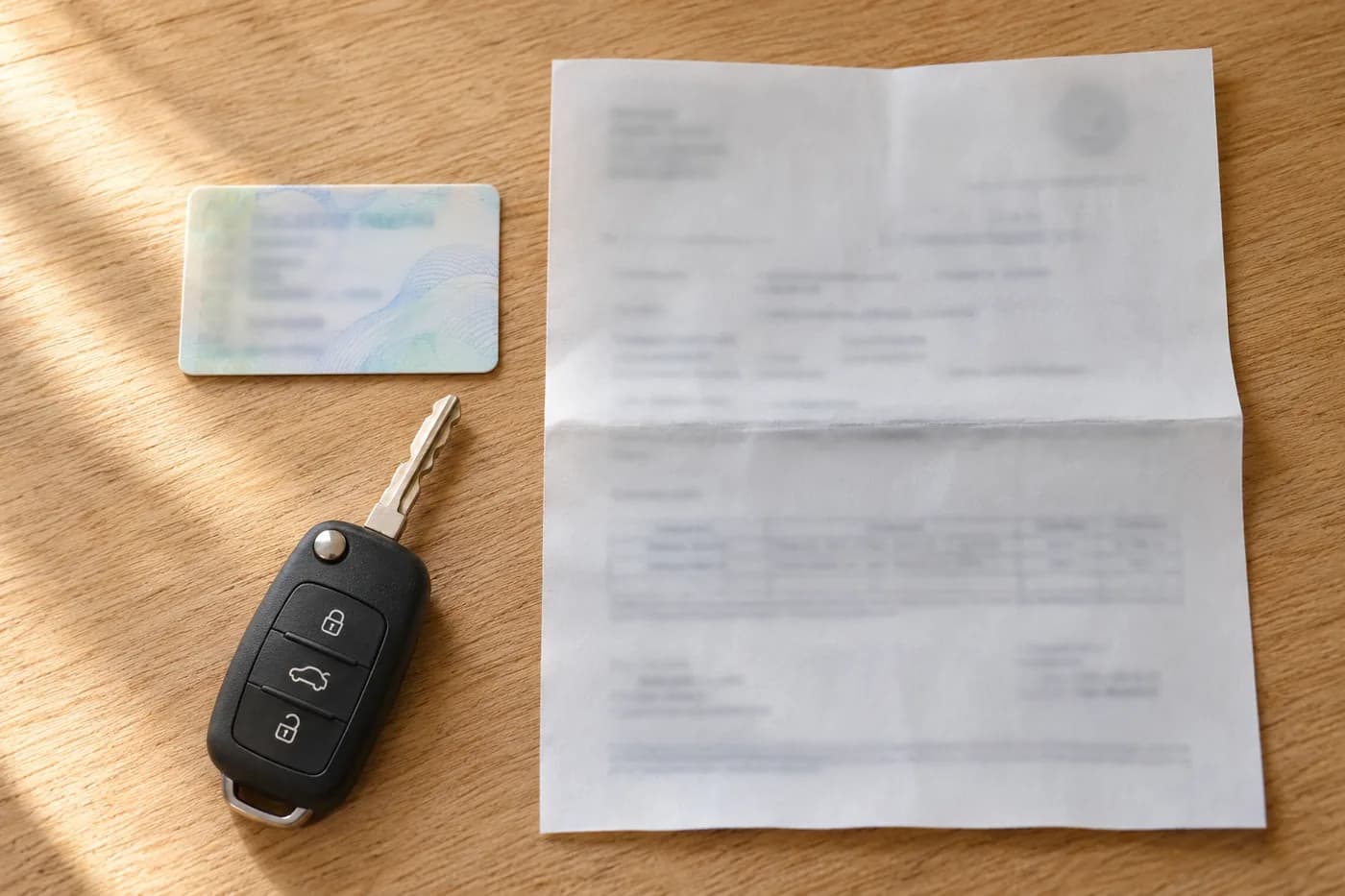
A kentekencard, a car key and an RDW transfer form laid out on a wooden table

Why this exists

Owning a car here is an entry in a register.

Your name sits against the plate, and that is where the road tax lands, where the duty to insure sits, and where a speeding fine from a camera ends up. Handing someone the keys changes none of that. Changing the register does.

Three things have to line up before it changes. Two of them are pieces of paper you were given years ago and filed somewhere sensible. The third only appears once someone has worked through the procedure properly, which is where a well meaning private buyer tends to go quiet on you.

  1. The registration code ()tenaamstellingscodeNine digits, delivered to you in two separate pieces of post. Without both of them, nothing moves.

    Posted to you in two halves, often years apart. Find both before you agree a date.

  2. The transfer logged with the RDWThe Dutch vehicle authority. Its register is what legally decides whose car this is.

    The moment ownership moves. Keys and cash change nothing until this is logged.

  3. The proof of transfer ()vrijwaringsbewijsYour receipt for the handover, stamped with the date and time your name left the car.

    Proof the car stopped being yours at a precise minute. It is what ends the tax and the fines.

So we buy cars outright and do that part ourselves. The site is in English because the paperwork is not, and nobody arrives in this country already knowing these words.

Our side of it

What we commit to

  1. The figure has reasons behind it

    Three things set it. What the register already holds on the car, what you tell us about its condition, and what that model is doing on the Dutch market right now. Photographs sharpen all three.

  2. Asking binds you to nothing

    The offer is free and no fee is taken out of it later. Go quiet on us and one reminder email follows, then silence. Nobody telephones to ask what you decided.

  3. You never have to move the car

    We drive to it, anywhere in the country, villages included, at no cost. One that will not start, or has no valid APK, the Dutch roadworthiness test, goes on a transporter.

  4. Your name comes off the register that day

    The RDW transfer is done during the visit, not posted off afterwards, and the proof of it stays in your hands. The money moves on the same visit.

And the alternatives

Three ways out of the register

What separates them is who does the paperwork and how long your name stays on the car. Ours is the last one, and it is not the right answer for everybody.

Advertise it yourself

Paperwork
The buyer's, then yours to chase
Money
Usually the most
Your name is off
Whenever they get round to it

Here the transfer is the buyer's job, not yours: they put the car in their own name online with DigiD or at a counter, using the card and the full code you hand them, and the proof comes back to you from them. A buyer also needs a Dutch address and an entry in the BRP, the population register, so not everyone who turns up can actually complete it.

Trade it against your next car

Paperwork
The dealer's
Money
Tangled with the new car
Your name is off
That appointment

Sensible if you are buying from that dealer anyway, and your name leaves the car in one appointment. The difficulty is arithmetic. The allowance for the old car and the price of the new one get settled in a single conversation, so ask for the two figures written down separately before agreeing to either.

Sell it outright to usThis is us

Paperwork
Ours
Money
Fixed, and agreed first
Your name is off
The day you pick

A figure by email, with nothing committed on your side. Accept and we come to the car, change the register ourselves and pay during the visit. What you trade away is the chance that a slow private sale would have paid you more. What you get back is a date of your choosing and nothing left to chase.

Before you fill anything in

Ask us anything first.

A message costs nothing and does not put you on a mailing list. If you cannot find half of your registration code, or you are not sure we would want the car at all, it is quicker to ask than to guess your way through a form.

Where we stop

  • We do not advertise your car, take it on consignment or hold on to it while we look for a buyer somewhere else. There is one buyer on this site and it is us, so what you get is a yes or a no you can plan around.
  • A car that is not in your own name is beyond us. A lease car, or one whose code still sits with a finance company, has to be sold by whoever the register says owns it.
  • We make no claim to beat every buyer in the country. Ask two more of them. The offer will still be here.

Common questions about us

Is the offer free, and am I tied to anything once I ask?

No. The offer is free, there is no fee taken out of it later, and nothing is binding on you until you accept it.

What are you looking at when you price my car?

Three inputs. What the register already holds about the car, what you tell us about its condition, and what that model is doing on the Dutch market at the moment. Photographs sharpen all three, because they show us your car and not the average one.

Can I name my own price?

Tell us, and put your own figure on the offer page. We look at it again properly and come back with a yes or a no, and the reason behind whichever it is.

Will you pick the car up from where it is parked?

Yes, at no cost, anywhere in the country, villages included. Tell us the address, whether the car drives, and whether there is a gate, a barrier or a height limit between it and the road.

All questions and answers

Ready to sell your car?

Your number plate is all we need to start.

No Dutch number plate? Enter your car details instead