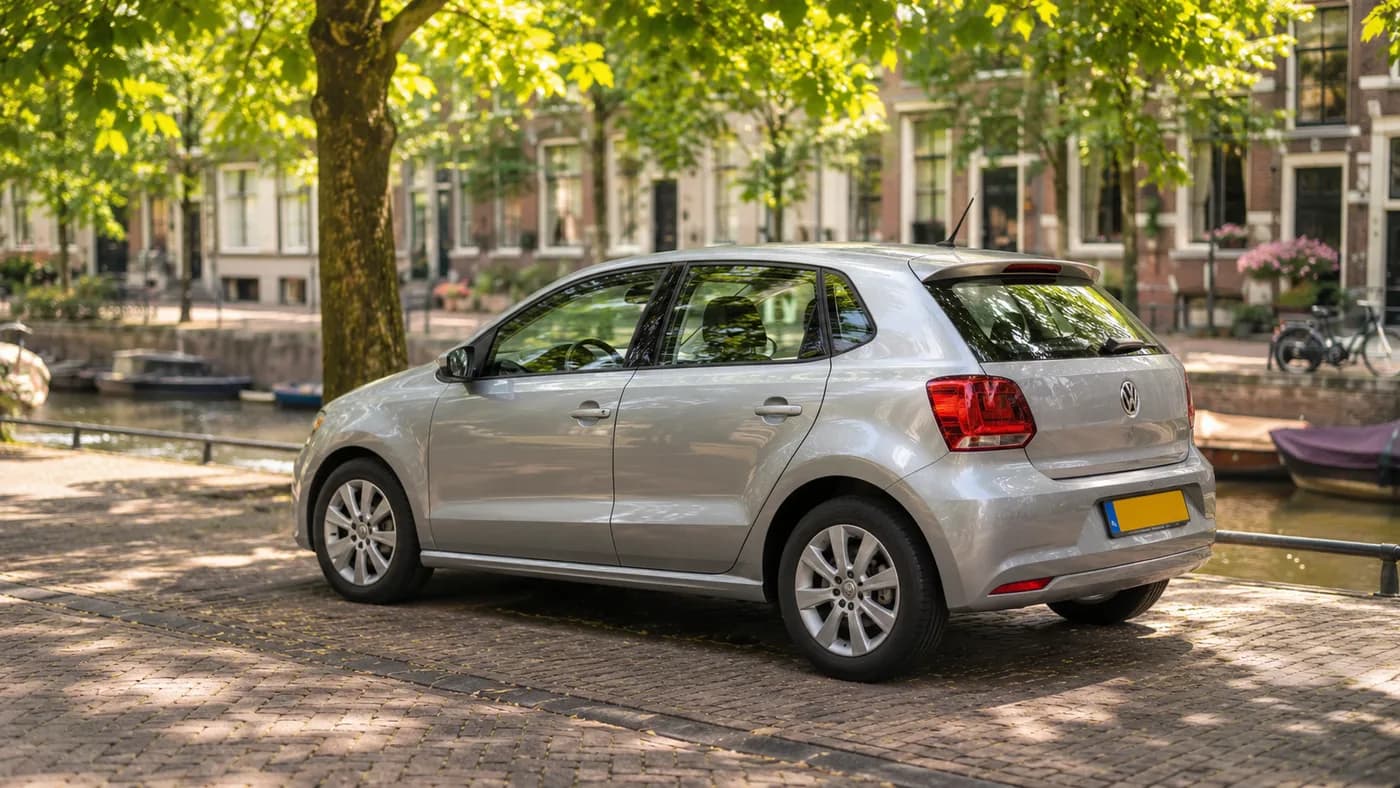
A silver Volkswagen Polo parked on the cobbles beside an Amsterdam canal

What happens after you enter your plate

Each stage in the order you meet it, with every Dutch document named as it comes up. The number plate is the only thing needed to start.

The four stages

Start with the number plate

Type in the plate and the mileage. Make, model, year and fuel come straight out of the vehicle register, so there is nothing to look up. Say so if the car has damage or will not start, and attach photographs if you have them.

A person goes through it

Your answers and your photographs are read here before any figure is worked out. Anything that does not add up comes back to you as a question, and the pricing waits for your reply.

An offer lands in your inbox

The email carries a link to a page belonging to your request. The amount is on it, with three choices: accept, decline, or name a figure of your own. Nothing on that page expires.

Car for money, there and then

We travel to the car, free of charge, on a day you name. The register change is done at the kerb, the money moves before we leave, and the proof of transfer, the vrijwaringsbewijs, goes in your pocket.

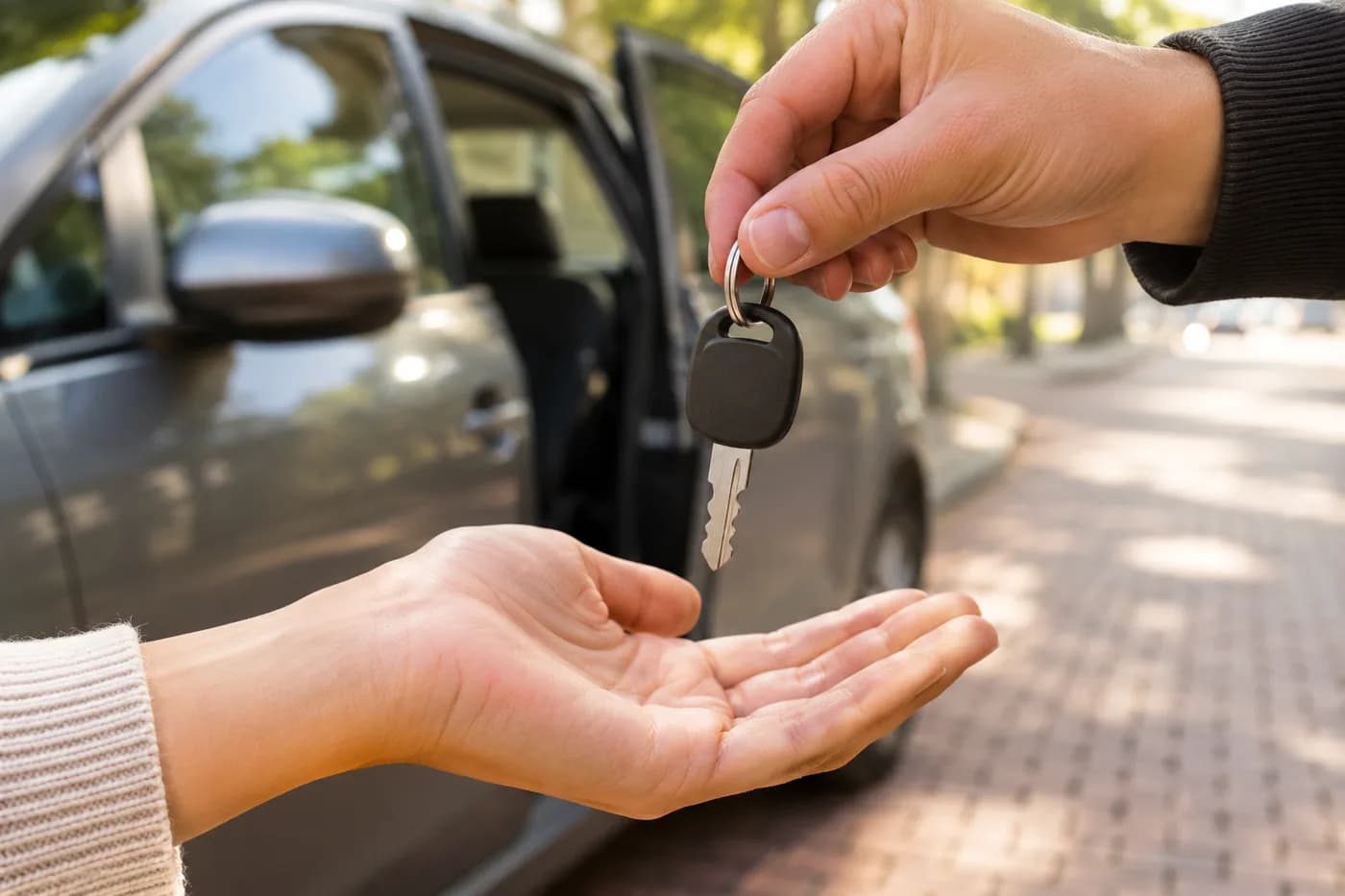
A key changing hands next to an estate car parked on a residential Dutch street, a clipboard of paperwork resting on the bonnet

What actually happens at handover

Collection day in order, from where we park to the piece of paper you are left holding.

  1. We come to the car

    You name the day and the address: home, work, a company car park, a lock-up. Mention a gate, a barrier or a height limit beforehand, because the right vehicle has to turn up. A car that will not start, or has no valid APK, the Dutch roadworthiness test, is loaded onto a transporter and never touches the public road.

  2. We go over the car together

    A walk round against what you described, the keys counted, the boot and the service book opened. This is also the moment for anything you have been saving up to ask, while the person who can answer it is standing next to you.

  3. The register changes while you stand there

    You pass over the kentekencard, your registration card, and the nine digits of your code. We do the RDW transfer on the spot, and the vrijwaringsbewijs prints with a date and time on it. That stamp is the moment the car stops being your problem for tax, for insurance and for anything a camera catches.

  4. Paid before the car moves

    Nothing is held back for later. Your own banking app is the proof, not a screenshot and not a link, and once the money shows up the car can be loaded. Two jobs stay with you afterwards: tell your insurer, and file the vrijwaringsbewijs somewhere findable. The road tax, the motorrijtuigenbelasting, stops by itself and the Belastingdienst returns what you had paid ahead.

On timing

The form itself is short

The plate does most of the filling in. What is left for you is the mileage, whether it drives, and whatever you would point out to a neighbour who was thinking of buying it. Photographs are optional and they do make a difference.

A thin request takes longer

A full description with photographs is the quickest thing for us to price. One with gaps needs a question answered first, and that is time added at the beginning. It is the whole of the difference.

The handover date is yours to pick

Plenty of people accept weeks before they want the car gone, which suits us. The offer sits on your page with no expiry date, unchanged, until you accept it, decline it or we send a revised one. Go quiet for a few days and one reminder email arrives. Only the one, and nobody telephones.

Dutch terms, explained

The RDW register

Every Dutch vehicle sits in the RDW register against one person or company. The car belongs to that name until the entry changes, which is why a sale here is a transfer and not a handshake. Even a car put on hold for the winter, schorsen in Dutch, stays in the register under your name until somebody moves it out.

Registration card (kentekencard)

Credit card sized, issued by the RDW, and the document that names the current owner. Cars that have stayed with one owner since before 2014 may still have the paper kentekenbewijs in two or three parts, equally valid. Bring whichever version you were given, every part of it.

Registration code (tenaamstellingscode)

Nine digits, split across two documents. The first four sit on the tenaamstellingsverslag you were given when the car went into your name; the other five are on the letter that arrived with your registration card. Both are needed for the transfer, so track them down before the day. A lost code can be reissued to the registered owner by the RDW.

Proof of transfer (vrijwaringsbewijs)

The word means indemnity, and that is the work it does: it records that the car left the register under your name, at a stated date and time. Everything that attaches to a car follows the register and not the keys, so this is the document that ends your side of it. If the card has been replaced or the code does not match it, the transfer fails on the day and nothing prints, which is reason enough to check both beforehand.

What to bring on the day

None of this is needed for an offer. It all matters on the day the car changes hands.

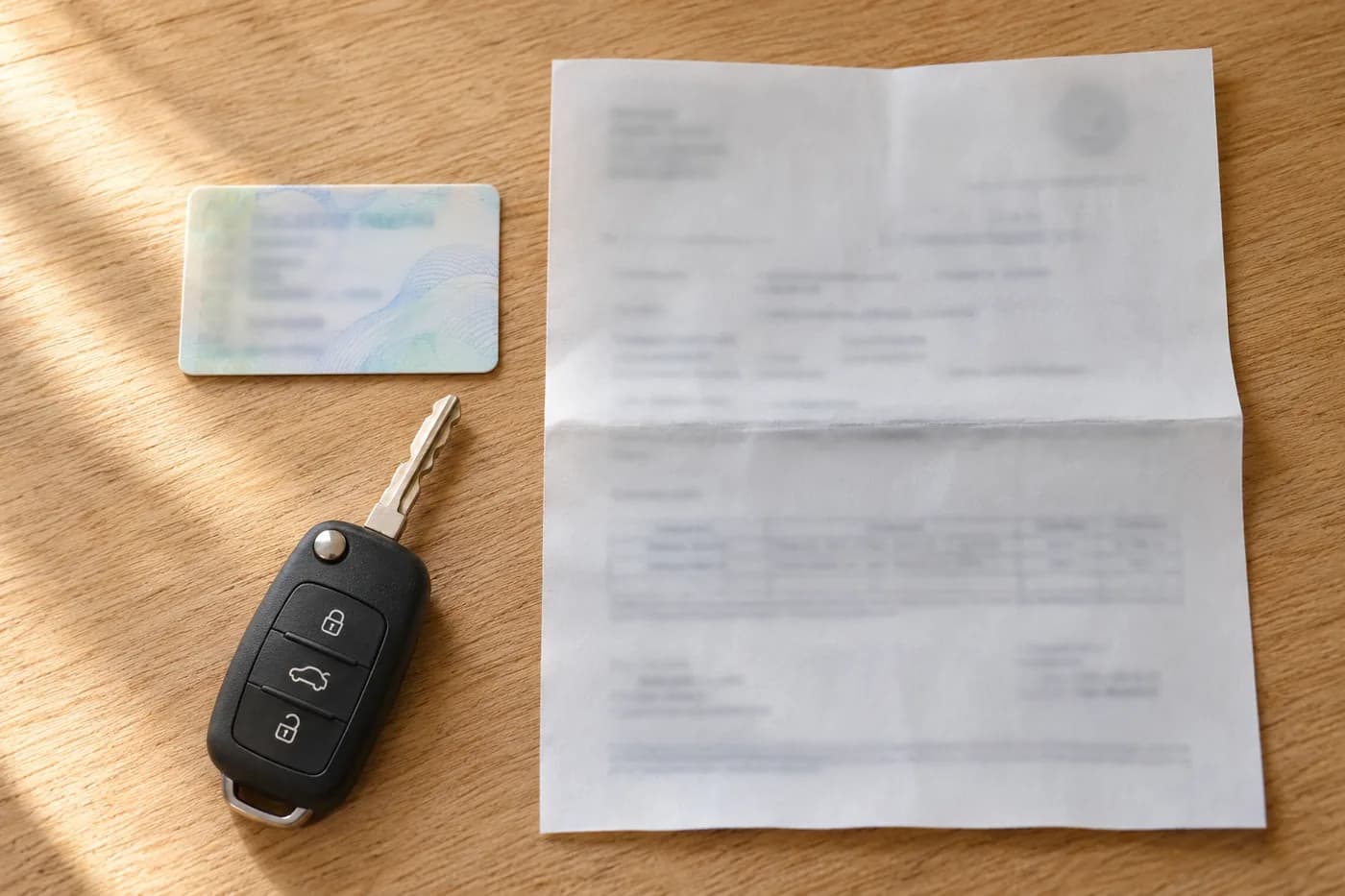
A kentekencard and an RDW transfer form held flat on a clipboard, one car key laid across them
  • The registration card (kentekencard), or the old paper version if the car predates it
  • Both halves of the registration code (tenaamstellingscode), nine digits between them
  • A valid passport or ID belonging to the registered owner
  • Every key the car has, spares included
  • The service book, any repair invoices and the latest APK report, if you still have them

Our side of it

The figure follows what you told us, and we will say which details moved it. The RDW transfer is our work, and the vrijwaringsbewijs is in your hand before we drive away.

We will not put a number on a car we know nothing about, and we do not pretend ours is the only figure worth looking at. Turning it down costs you nothing, and nobody will telephone you about it.
What people ask at this stage

Are my kenteken and the mileage enough to get a price?

Two things. Your number plate, the kenteken, and the mileage. From the plate alone the Dutch vehicle register gives us the make, model, year and fuel. Photographs help and are not required at this stage. Documents belong to the handover and are nothing to think about yet.

How soon do I get the offer, and when would the car go?

The request is short, because the plate does most of the filling in. How quickly an offer comes back depends on how much detail came with it, so a request with photographs is answered sooner than one without. After you accept, the handover date is yours to name.

What are you looking at when you price my car?

Three inputs. What the register already holds about the car, what you tell us about its condition, and what that model is doing on the Dutch market at the moment. Photographs sharpen all three, because they show us your car and not the average one.

Will the offer still be there if I leave it a few weeks?

There is no expiry date on it. It stays on your offer page, unchanged, until you accept it, decline it, or we come back with a revision. Go quiet and you get one reminder email. Only the one.

Can I name my own price?

Tell us, and put your own figure on the offer page. We look at it again properly and come back with a yes or a no, and the reason behind whichever it is.

My partner is the one on the kentekencard. Can I still sell it?

Not on your own. The transfer runs on the registered owner's registration code and their ID, so that person has to be part of it. If the car belongs to a lease company or to your employer, the sale has to go through them.

When does the money reach me, before or after the car leaves?

At the handover, once the car has been checked and moved out of your name at the RDW. Nothing is held back and there is nothing to wait for afterwards.

All questions and answers

Ready to sell your car?

Your number plate is all we need to start.

No Dutch number plate? Enter your car details instead