
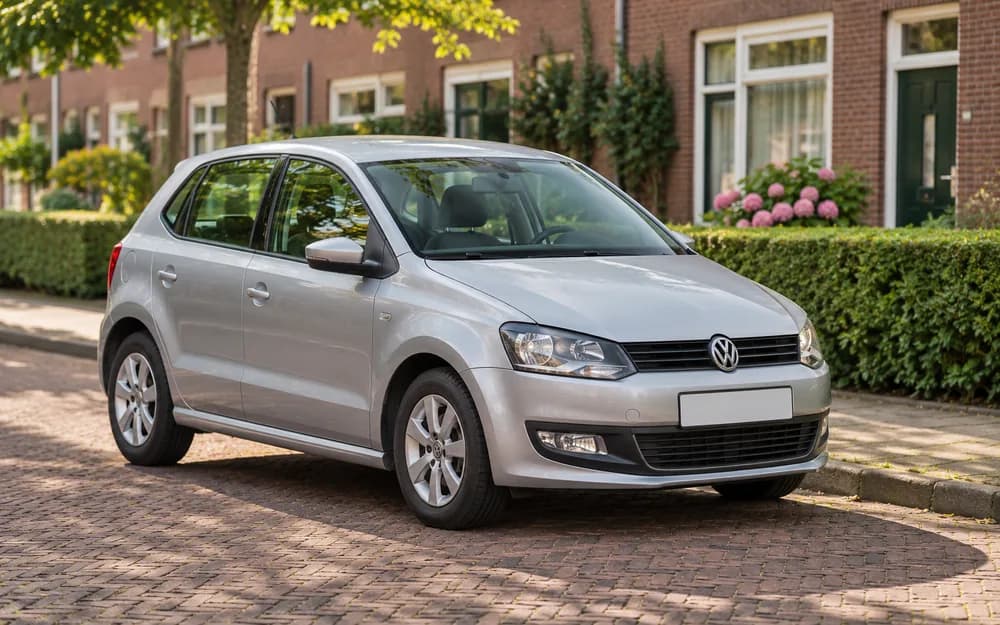
Everyday cars
Selling a car that works perfectly well
Most cars we buy are not broken, not crashed and not worn out. They are ordinary cars belonging to people whose circumstances changed. You are leaving, or a lease car turned up at work, or the second car has not moved since the spring.
The offer
What this does to the price
For a car like this the figure comes from the model, the year, the mileage and the condition, judged against what the same car is doing on the Dutch market this month. Photographs do more than any description, because they let us price your car and not an average one. Mentioning a fault costs you less than you think. What it buys you is an offer that still stands when we are standing next to the car.
What's covered here
If your car looks like one of these, you are on the right page. None of it has to match exactly.
Any make, as long as the plate is Dutch
What we need is a car in the Dutch register, because an RDW transfer is how the car leaves your name. The badge on the bonnet is not the deciding factor. A Dacia and a Mercedes go through exactly the same process.
Any age, within reason
There is no cut off year written down anywhere. Cars from roughly 2008 onwards have a busy market here. Older than that and the value gets thinner, though it rarely reaches nothing. Asking takes a plate and a mileage reading.
Wear that came from being used
A stone chipped bonnet, a kerbed alloy, a shiny patch on the driver's seat, a boot that has carried a bike. This is what a used car looks like in a country where people actually drive them. We price it as the normal condition, because it is.
A history with a gap or two
A full service book is worth having and most cars do not have one. If the last two services were done by an independent garage with no stamp, or the book went missing in a house move, say so and tell us who did the work. A named garage is worth more than a blank page.
Before you ask
Two things worth settling first
The fuller the picture now, the firmer the number stays once we see the car at the handover.
When selling makes sense
- You are leaving the country and want the car out of your name before you deregister at the gemeente, your municipality.
- A lease car or a company car has arrived and this one is now surplus.
- The second car is taxed, insured and parked, and the only thing it does each month is cost money.
- You would rather not have strangers at your door for test drives, and you would rather not arrange the transfer at a post office yourself.
- A private buyer has promised to come twice and has not turned up either time.
Tell us this upfront
- The mileage as it reads on the dashboard, to the kilometre if you can
- Anything that does not work: a window, the air conditioning, a sensor
- What comes with it: both keys, the cables, a second set of wheels, the boot floor
- Where the car is parked and whether it drives
Common questions
Is there an age at which you stop making offers?
No. We do not work from a cut off year. A twenty year old car in running order is still worth asking about, and the answer takes a plate and a mileage reading to get.
Should I sell this one before I have the next one?
That is your call and you do not have to decide it now. Ask for the figure, then pick a handover date that suits you, even if it is weeks away. The offer sits on your own page until you answer it, so you are never left without a car in the gap.
How much difference do photographs really make?
They make the offer firmer. With clear shots of all four sides, the interior and the dashboard with the ignition on, there is very little left for us to find on the day. Vague photos mean a cautious offer, which is in nobody's interest.
Which papers and keys do I need to bring to the handover?
Four things. The registration card, the kentekencard. Both halves of the registration code, the tenaamstellingscode, which arrives with the card or separately by post. A valid passport or ID card. And every key that belongs to the car. If it is still on the old paper registration from before 2014, bring that in place of the card. The RDW transfer is our job, and the vrijwaringsbewijs is in your hand before we leave.
Other cars we buy
Ready to sell your car?
Your number plate is all we need to start.